The Smart Guide to Sticking With a Vegan Meal Plan Without the Struggle
The Smart Guide to Sticking With a Vegan Meal Plan Without the Struggle
You’ve decided to give a vegan meal plan a real shot. Maybe you want more energy, clearer skin, or just to align your diet with your values. But if you’ve tried plant-based eating before, you already know the hard truth: having a plan on paper and actually following it are two different things.
This guide walks you through the exact system that works for real people with busy lives. No extreme restrictions, no expensive superfoods, and no shame if you slip up. You’ll learn how to set up your kitchen, prep in under an hour, handle social situations, and fix the top mistakes that derail most people within the first two weeks.
What You’ll Need Before You Start
Don’t overcomplicate this. You don’t need a $400 blender or a pantry full of obscure powders. Here’s the short list of essentials that make following a vegan plan significantly easier:
- A reusable meal prep container set – Glass or BPA-free plastic with separate compartments. Amazon Basics or PrepNaturals sets work fine.
- A reliable plant-based protein powder – Look for pea or brown rice protein with no artificial sweeteners if your stomach is sensitive. Brands like Naked Pea or Orgain are solid starting points.
- Staples you’ll use daily – Canned beans (black, chickpea, kidney), lentils, oats, frozen vegetables, brown rice, quinoa, and a few spices (cumin, smoked paprika, garlic powder, nutritional yeast).
- A simple food scale – Not for calorie obsession, but for portion consistency so you don’t undereat or overeat complex carbs.
- One cookbook or trusted blog – Stick with one source at first to avoid recipe overwhelm. Minimalist Baker or How Not to Die by Dr. Greger are reliable.
Step 1: Define Your “Why” and Your “How Much”
Before you touch a grocery list, clarify your goal. Are you following this plan for weight loss, muscle maintenance, general health, or ethical reasons? Your answer changes your approach.
If you’re trying to lose body fat, your meal plan needs a slight calorie deficit and higher fiber. If you’re training for strength, you need to prioritize protein density at every meal. If you’re just eating for health, focus on whole foods and variety.
Here’s a simple benchmark for most adults: aim for 1.6 to 2.2 grams of protein per kilogram of body weight if you exercise regularly. For a 150-pound person, that’s roughly 110 to 150 grams of protein daily. That sounds like a lot, but it becomes easy once you know the right combinations.
Step 2: Build a Flexible Template, Not a Rigid Menu
The biggest mistake people make is planning every single meal for seven days. That works for about three days, then you hate food and quit. Instead, build a template that lets you swap ingredients based on what you have or crave.
Sample Daily Template
- Breakfast: Oats + plant milk + fruit + nuts or seeds + optional protein powder
- Lunch: Grain + legume + roasted vegetables + sauce (tahini, salsa, or vinaigrette)
- Dinner: Protein source (tofu, tempeh, or seitan) + starch + greens + seasoning
- Snack: Fruit + nut butter or hummus + veggies
With this template, you can eat oatmeal with blueberries and walnuts on Monday, switch to peanut butter and banana oats on Tuesday, and still be “on plan.” The structure stays constant; the ingredients rotate. This reduces decision fatigue dramatically.
Step 3: Batch Your Basics in One Hour
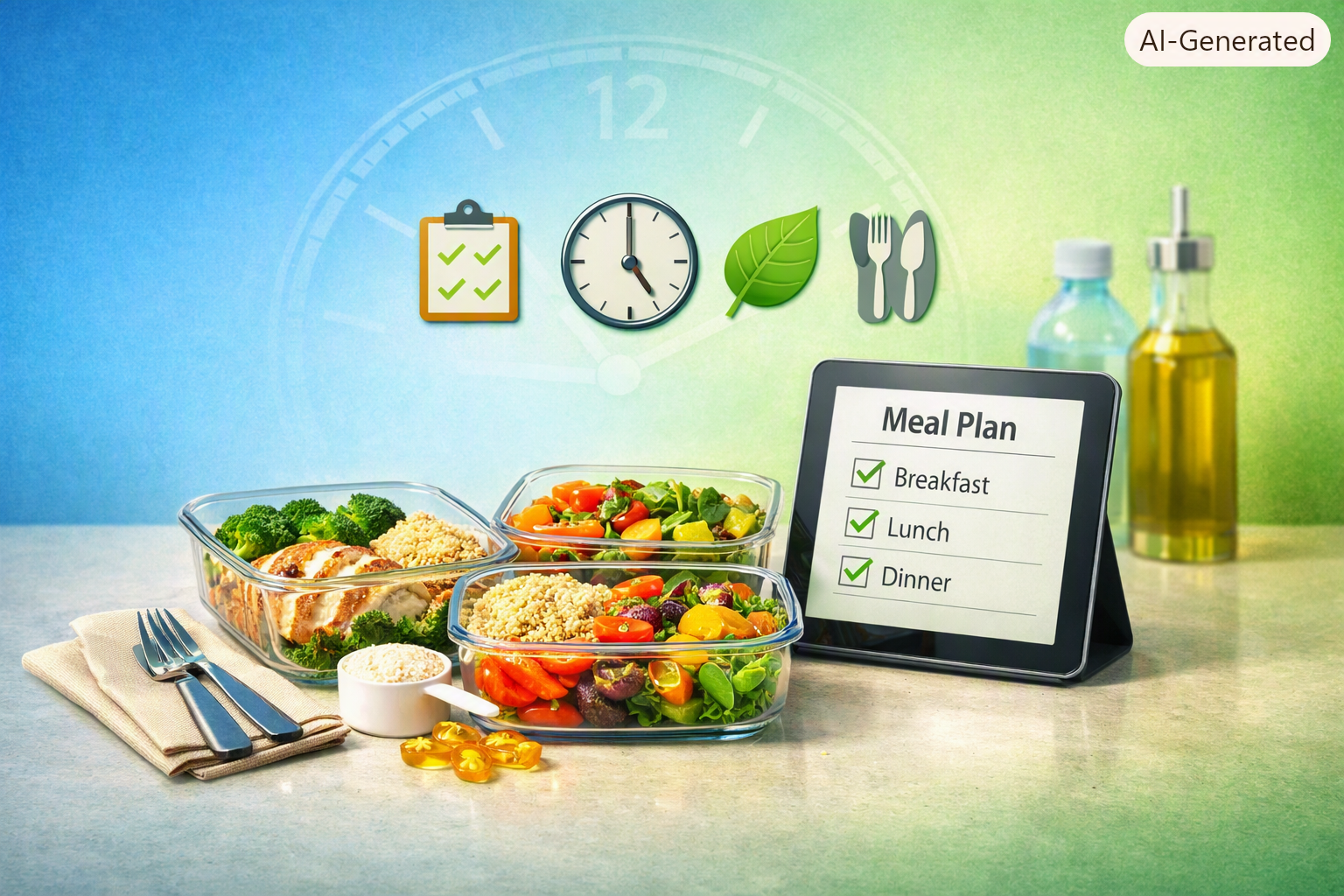
Set aside one hour on Sunday or whenever your week starts. You don’t need to cook full meals. Instead, batch the components so assembly takes under five minutes each time you eat.
What to Batch
- Cook one large batch of grains (quinoa, brown rice, or farro) – keeps 5 days in the fridge
- Cook one batch of lentils or seasoned black beans
- Roast a sheet pan of vegetables (broccoli, sweet potatoes, bell peppers)
- Make one dressing or sauce (tahini lemon works on almost everything)
- Wash and chop raw veggies for snacks
If you own a pressure cooker (like an Instant Pot), you can cook dry beans and grains simultaneously in separate containers using pot-in-pot method. That cuts your active time down to about 20 minutes.
Step 4: Apply the Protein Anchor Method
Here’s where most people fail: they eat carb-heavy vegan meals (pasta, rice bowls, smoothies) and end up hungry an hour later. The fix is the protein anchor – every meal must have a visible, deliberate protein source.
For breakfast, that means adding at least 20g protein via tofu scramble, protein powder, or soy yogurt. For lunch and dinner, choose a main protein (tofu, tempeh, seitan, or legumes) and build the rest of the plate around it. Don’t treat protein as an afterthought you sprinkle on top.
One of the most effective (and cheapest) tools for this is a tofu press. Pressing tofu for 15 minutes before cooking dramatically improves texture and allows it to absorb marinades better. The Tofuture tofu press is under $20 on Amazon and pays for itself in reduced food waste.
Step 5: Manage Your Hunger with Smart Fiber and Fat
Vegan meals are naturally high in fiber, which is great for satiety. But if you suddenly triple your fiber intake, you’ll feel bloated and miserable. Increase fiber gradually over two weeks.
The other missing piece is fat. Many new vegans go low-fat by accident (no butter, no cheese, no oil), then crash with low energy and constant hunger. Include healthy fat at every meal: avocado, nuts, seeds, full-fat coconut milk, or olive oil. Fat slows digestion and keeps you full for hours.
A good rule of thumb: add one tablespoon of ground flaxseed or chia seeds to your oats or smoothie, and include half an avocado or two tablespoons of tahini with lunch or dinner.
Step 6: Handle Cravings and Social Situations Without Guilt
Cravings happen. You’re human. The key isn’t to white-knuckle through them – it’s to have a bridge meal ready. A bridge meal is a vegan option that tastes indulgent but keeps you on track. For example:
- Vegan “cheese” sauce (cashews, nutritional yeast, garlic, water, blended) over whole-grain pasta
- Black bean burgers (frozen from brands like Hilary’s or Dr. Praeger’s) with sweet potato fries
- Dark chocolate-covered almonds for a sweet craving
For restaurants and social events, check the menu ahead of time. Mexican restaurants usually have bean burritos (ask for no cheese, add guacamole). Indian restaurants offer chana masala, dal, and vegetable curries with rice. Italian places often have marinara pasta or minestrone soup.
If you accidentally eat something non-vegan, don’t panic. Guilt-based eating is worse for your health than the slip itself. Get back to your template at the next meal.
Step 7: Track One Thing for the First 21 Days
Tracking everything (calories, macros, vitamins, water, sleep) is overwhelming. Instead, track just protein and variety for three weeks. Use a free app like Cronometer for protein, or just jot down whether you ate from each food group (legumes, grains, vegetables, fruits, nuts/seeds) every day.
This simple habit reveals gaps. If you realize you ate zero legumes three days in a row, you know your plan needs adjustment. Data removes the guesswork.
Common Mistakes That Sabotage Vegan Meal Plans
Mistake #1: Eating Too Few Calories
Plant foods are less calorie-dense than animal products. A vegan plate that looks “normal” size might actually be 300–400 calories less than your previous diet. Add calorie-dense foods like nuts, seeds, avocado, and dried fruit to compensate, especially if you’re active.
Mistake #2: Ignoring B12 and Vitamin D
You cannot get adequate B12 from plant foods alone without supplementation. Buy a vegan B12 supplement (methylcobalamin, 250 mcg daily) and a Vitamin D3 supplement (vegan version from lichen). Brands like Garden of Life and Deva are widely available. Set a phone alarm if you tend to forget.
Mistake #3: Relying Too Much on Meat Alternatives
Fake meats (Beyond, Impossible, vegan sausages) are fine occasionally, but they’re processed foods. They contain high sodium, saturated fat, and preservatives. Use them as treats, not daily staples. Your plan should be built on whole foods: beans, lentils, tofu, tempeh, and whole grains.
Mistake #4: Not Prepping Enough Snacks
When hunger hits and you have nothing ready, you’re going to grab whatever is quick – and that’s often chips or crackers. Pre-portion trail mix, cut veggies with hummus, or make energy balls (dates, oats, peanut butter, cocoa powder) on prep day.
Frequently Asked Questions
How do I get enough protein as a vegan?
Focus on protein-dense plants: tofu (10–20g per serving), tempeh (16g per half cup), lentils (18g per cup cooked), chickpeas (15g per cup), and seitan (21g per 3 ounces). Include a protein powder in your breakfast or post-workout drink if your whole foods don’t hit your target.
Will I lose weight on a vegan meal plan?
Many people do, because whole plant foods are less calorie-dense and higher in fiber. But weight loss depends on your overall calorie intake. You can still gain weight on a vegan diet if you eat excess nuts, oils, or processed vegan junk food. For weight loss, emphasize vegetables, legumes, and moderate portions of grains.
What if I don’t like tofu?
You have options: tempeh (nutty, firm), seitan (chewy, like meat), lentils, chickpeas, black beans, edamame, and vegan protein powders. Try different cooking methods – baked, pan-fried, or crumbled – before deciding you dislike all soy. Many people who think they hate tofu actually just haven’t pressed or marinated it.
How do I eat vegan on a budget?
Buy dried beans and lentils in bulk – they cost pennies per serving. Frozen vegetables are just as nutritious as fresh and last longer. Oats, rice, potatoes, and seasonal produce are cheap. Avoid pre-made vegan meals and expensive nut milks (make your own or buy shelf-stable cartons on sale).
Is a vegan diet safe for athletes?
Absolutely. Plenty of professional athletes (including ultramarathoners, weightlifters, and NFL players) thrive on vegan diets. The key is carefully tracking protein, iron, zinc, and B12. Aim for 1.6–2.2 g protein per kg body weight and consider a greens powder or iron supplement if your energy drops.
Building a Sample 3-Day Vegan Meal Plan That Actually Works
Here’s a realistic, non-perfect plan that hits around 1,800–2,200 calories with 80–100g protein:
Day 1
- Breakfast: Oatmeal with 1 scoop pea protein, 1 tbsp chia seeds, 1 cup blueberries, and 2 tbsp almond butter
- Lunch: Brown rice bowl with black beans, roasted sweet potatoes, sautéed kale, and tahini lemon dressing
- Dinner: Stir-fried tofu with broccoli, carrots, and brown rice noodles in peanut sauce
- Snack: Apple with 2 tbsp peanut butter
Day 2
- Breakfast: Tofu scramble (crumbled firm tofu, turmeric, onion, bell pepper) with whole-grain toast
- Lunch: Lentil soup with carrots and celery, side of whole-grain crackers
- Dinner: Whole-wheat pasta with lentil marinara sauce and a side salad with avocado
- Snack: Handful of almonds and a banana
Day 3
- Breakfast: Smoothie with 1 scoop vegan protein, 1 cup spinach, 1 frozen banana, 1 tbsp flax, and oat milk
- Lunch: Chickpea salad sandwich (mashed chickpeas, vegan mayo, celery, onion) on whole-grain bread
- Dinner: Baked tempeh with roasted Brussels sprouts and quinoa
- Snack: Hummus with cucumber and carrot sticks
Notice what’s missing? No complicated recipes, no obscure ingredients. Every item is available at a standard grocery store. The plan works because it’s repeatable and flexible.
Final Thoughts: Progress Over Perfection
Following a vegan meal plan effectively isn’t about never making mistakes. It’s about having a system that catches you when you fall. The template, the batch prep, the protein anchor – these tools do the heavy lifting so your willpower can take a break.
Start with step one today. Write down your reason. Stock the basics. Cook one batch of grains. That’s it. You’ll be surprised how far consistent small actions take you.
This page may contain affiliate links. We may earn a commission on qualifying purchases at no extra cost to you.
Ready to Make It Stick?
Pick one of the seven steps above and commit to it for the next week. Not all seven – just one. When that becomes automatic, add another. The only “perfect” vegan meal plan is the one you actually follow.