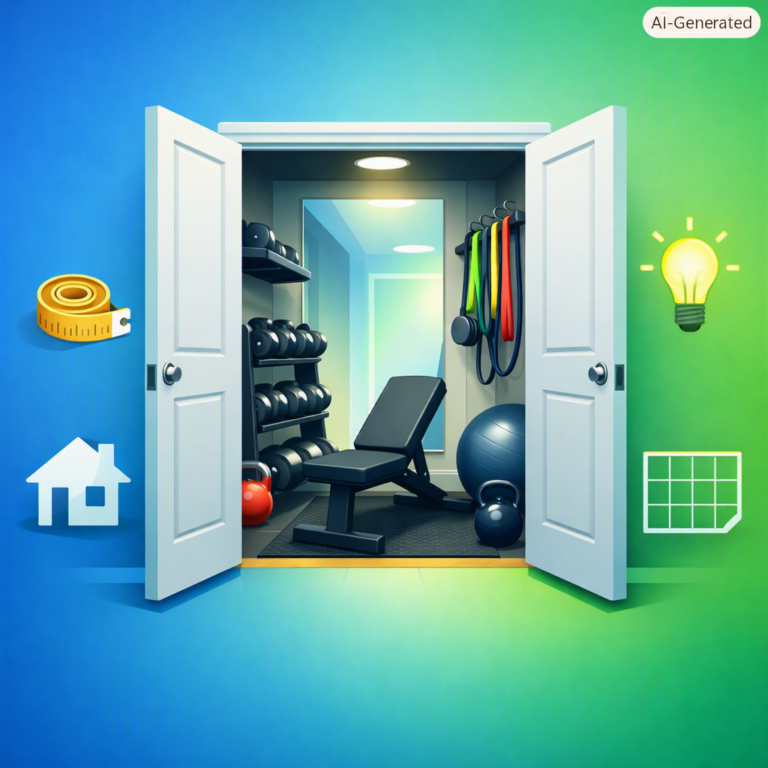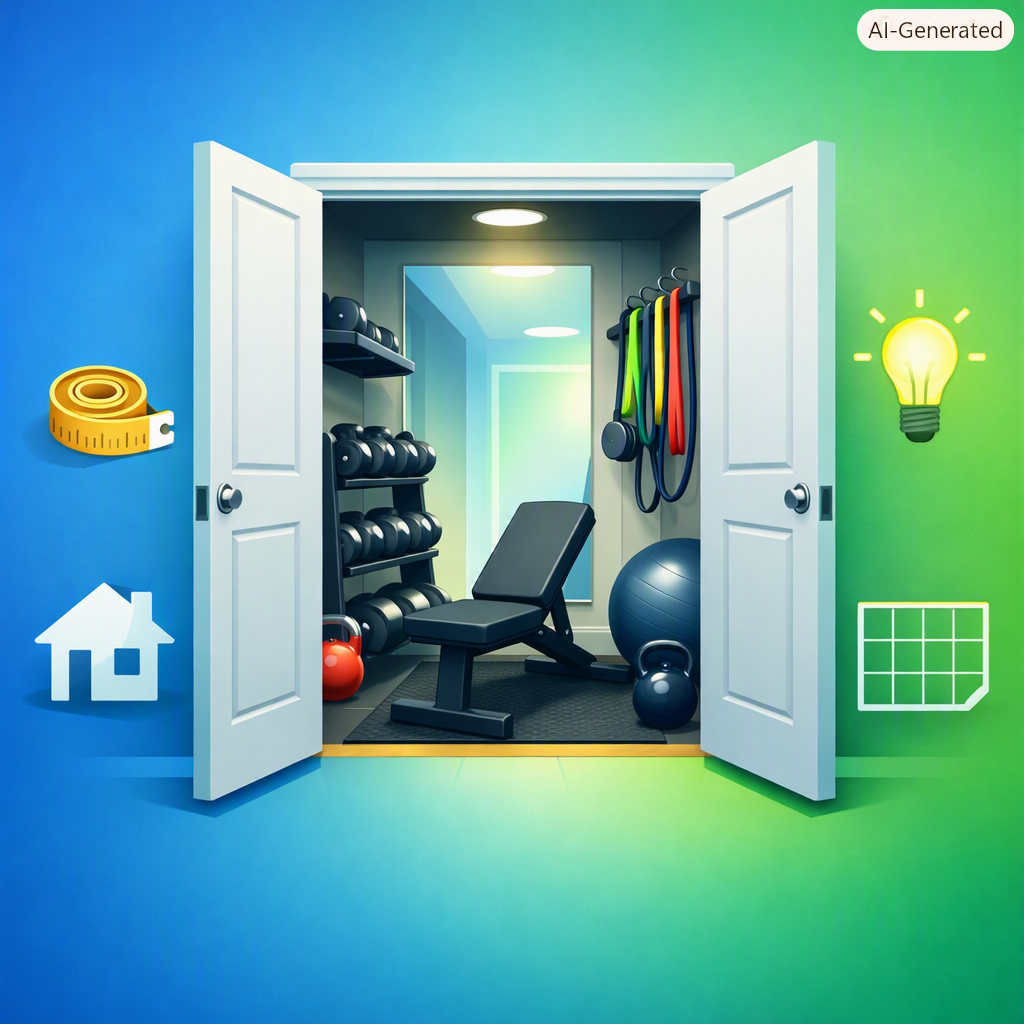
Your First Home Gym: A Beginner’s Guide to Outfitting a Small Space (Without the Overwhelm)
Walking into a big-box gym can feel intimidating—crowded machines, long waits, and equipment you’re not sure how to use. That’s exactly why a small home gym sounds so appealing. But once you start researching, the options explode: barbells, kettlebells, suspension trainers, foam rollers, bands in every color. It’s easy to buy too much or too little.
This guide cuts through the noise. You’ll learn exactly how to outfit a small home gym for beginners—under 50 sq ft, modest budget, zero equipment experience. No fluff. No $2,000 treadmills. Just a simple, repeatable system that gets you strong without turning your living room into a storage unit.
What You Need to Know Before Buying Anything
1. Your Space Audit
Measure your workout area. You need:
- Floor space: Minimum 4×6 ft for most exercises.
- Ceiling height: At least 7.5 ft for overhead pressing.
If your ceiling is lower, you’ll adjust your exercise selection later.
2. Your Fitness Goals
Keep it simple: general strength + conditioning. You need to squat, hinge, push, pull, and carry. That’s 95% of what beginners need.
3. Your Realistic Budget
A starter home gym can cost $300–$800 new, or far less used. You do not need a barbell or power rack yet. Start small, expand later.
Step 1: Choose Your Foundation Piece
Your first purchase determines everything else. Choose one of these three options:
Option A: Adjustable Dumbbells (Best All‑Around Choice)
Replace an entire dumbbell rack with one compact pair. Ideal for small spaces.
Pros: Versatile, compact, great for full-body training.
Cons: Usually max out at 50 lbs per hand; not drop-friendly.
Recommended: Bowflex SelectTech 552 — adjusts 5–52.5 lbs with a dial system.
Option B: A Single Kettlebell (Minimalist Pick)
If you have under 20 sq ft, a single kettlebell covers swings, squats, presses, and core work.
Pros: One tool for full-body workouts.
Cons: Harder to progress weight.
Recommended: Kettlebell Kings or Rogue Fitness cast-iron bells.
Option C: Resistance Bands + Door Anchor (Ultra Budget)
Under $50 for rows, presses, curls, and leg work.
Pros: Cheap, portable, beginner-friendly.
Cons: Harder to track progression; bands can snap.
Recommended: Weller Super Bands set.
Best choice for most beginners: Adjustable dumbbells.
Step 2: Add a Floor Mat (Non‑Negotiable)
A good mat protects your floor, reduces noise, and prevents slipping.
Recommended: ProsourceFit Puzzle Mat or American Floor Mats Diamond Top.
Step 3: Must‑Have Accessories (Under $50 Each)
Pull-Up Bar
Pull-ups are the best upper-body pulling exercise.
Recommended: Iron Gym Doorway Bar.
Exercise Ball
Great for core work, stability, and light pressing.
Recommended: Gaiam or TheraBand burst-resistant ball.
Jump Rope
Elite cardio in 4 ft of space.
Recommended: RX Smart Gear or Rogue SR‑1.
Step 4: Organize Your Space (The One‑Shelf Rule)
Small gyms fail when gear is scattered. Use one shelf or wall rack for everything. Keep your mat rolled up. Your gym should set up or pack away in under two minutes.
Step 5: Your First Month of Workouts
Three full-body sessions per week:
- Goblet Squats — 3×10
- Dumbbell Bench Press — 3×10
- Bent-Over Rows — 3×10 per side
- Overhead Press — 3×10
- Pull-Ups or Negatives — 3 sets
- Plank — 3×30 seconds
Off days: 10 minutes of jump rope (30 sec on / 30 sec rest).
Common Beginner Mistakes
- Buying a cheap barbell set: Too big for small spaces.
- Skipping mobility tools: Add a foam roller + lacrosse ball.
- Buying a bench that doesn’t fit: Measure first.
- Ignoring noise: Use mats and controlled reps.
FAQ
How much do I need to spend?
$150–$500 is enough for a complete beginner setup.
Can I build muscle without a barbell?
Yes—dumbbells, kettlebells, and bodyweight progressions work extremely well.
What if I don’t have a dedicated room?
A corner of your bedroom or living room works fine.
Should I buy used equipment?
Absolutely—save 40–60% buying used dumbbells, kettlebells, and mats.
Final Thoughts
A small home gym doesn’t require a spare room or a huge budget. Start with one foundation piece (dumbbells or a kettlebell), add a mat and pull-up bar, and commit to three full-body workouts per week. You’ll build strength, consistency, and confidence—without overwhelming your space or wallet.
Grab a tape measure, set your budget, and pick your first piece today.
Affiliate Disclosure: This page may contain affiliate links. We may earn a commission at no extra cost to you.