STRENGTH TRAINING: THE SAFE INTENSITY BLUEPRINT
Why Strength Training Intensity Matters
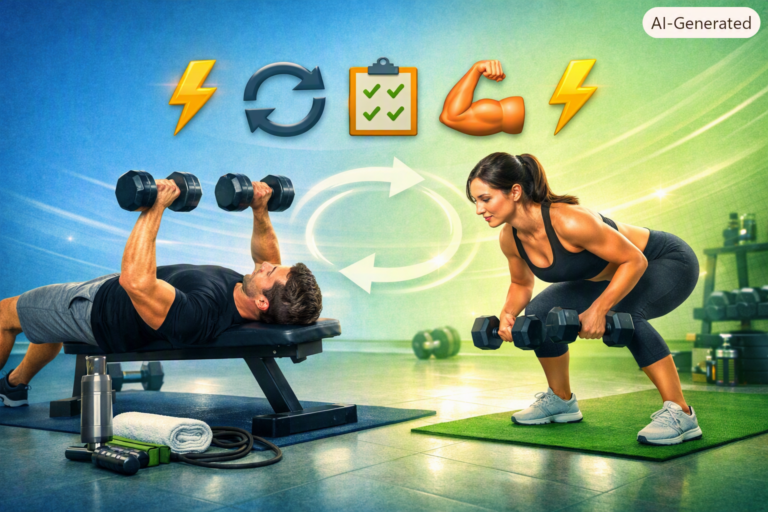
Intensity is the engine of strength training — but too much too soon leads to injury, burnout, and stalled progress. Too little intensity leads to slow results and wasted effort. The sweet spot is a controlled, progressive intensity that challenges your muscles without overwhelming your joints, tendons, or nervous system.
This guide gives you a clear, safe, and effective intensity blueprint you can use for any strength program — beginner to advanced.
The 3 Pillars of Safe Strength Intensity
Safe intensity is built on three pillars:
1. Load (Weight Used)
Load determines how much force your muscles must produce. Safe load selection means:
-
You can lift with clean form
-
You can complete the set without grinding
-
You stop 2–3 reps before failure (RIR 2–3)
2. Volume (Sets × Reps)
Volume determines total work. Safe volume means:
-
10–20 total sets per muscle group per week
-
Higher volume for smaller muscles
-
Lower volume for large compound lifts
3. Tempo (Speed of Movement)
Tempo controls joint stress and muscle tension. Safe tempo means:
-
Controlled lowering (2–3 seconds)
-
Smooth lifting (1–2 seconds)
-
No bouncing, jerking, or rushing
How to Choose the Right Intensity Level
Use this simple system:
Beginner Intensity
-
RIR: 3–4
-
Load: Light to moderate
-
Volume: 8–12 sets per muscle weekly
-
Tempo: Slow and controlled
-
Goal: Learn form, build joint resilience
Intermediate Intensity
-
RIR: 2–3
-
Load: Moderate
-
Volume: 12–16 sets per muscle weekly
-
Tempo: Controlled with occasional explosive lifts
-
Goal: Build strength and muscle consistently
Advanced Intensity
-
RIR: 1–2
-
Load: Moderate to heavy
-
Volume: 14–20 sets per muscle weekly
-
Tempo: Controlled with strategic power work
-
Goal: Maximize strength and hypertrophy
Safe Intensity for Major Lifts
Here’s how to safely approach intensity for the big compound movements.
Squats
-
Start with loads you can control for 8–12 reps
-
Avoid “grinding” reps
-
Keep knees tracking over toes
-
Increase load only when form is perfect
Recommended Gear: Weightlifting Belt Helps stabilize your core and maintain safe intensity during squats. 👉 Amazon Affiliate Link: https://www.amazon.com/dp/B07ZQJ9Z8F
Deadlifts
-
Use submaximal loads (RIR 2–3)
-
Prioritize spinal alignment
-
Avoid high-rep deadlifts
-
Increase load slowly over weeks
Recommended Gear: Deadlift Socks Protects shins and improves bar glide. 👉 Amazon Affiliate Link: https://www.amazon.com/dp/B01N6J4Q1X
Lifting Straps Helps maintain grip without overloading forearms. 👉 Amazon Affiliate Link: https://www.amazon.com/dp/B07G2V7X8F
Bench Press
-
Keep shoulder blades retracted
-
Lower with control
-
Avoid bouncing off the chest
-
Use spotters for heavy sets
Recommended Gear:
Wrist Wraps Supports wrist stability under load. 👉 Amazon Affiliate Link: https://www.amazon.com/dp/B01N6J4Q1X
Overhead Press
-
Brace your core
-
Avoid excessive back arch
-
Use moderate loads
-
Keep reps smooth and controlled
Recommended Gear: Elbow Sleeves Provides joint warmth and stability. 👉 Amazon Affiliate Link: https://www.amazon.com/dp/B07B8W8YQF
Rows & Pulls
-
Avoid jerking the weight
-
Keep elbows close
-
Use full range of motion
-
Increase load only when form stays tight
Recommended Gear: Lifting Straps Improves grip for heavy rows. 👉 Amazon Affiliate Link: https://www.amazon.com/dp/B07G2V7X8F
Intensity Progression Blueprint (4 Weeks)
Week 1: Establish Baseline
-
RIR 3–4
-
Light to moderate loads
-
Focus on perfect form
Week 2: Controlled Increase
-
RIR 2–3
-
Add 5–10% load
-
Maintain tempo discipline
Week 3: Peak Intensity
-
RIR 1–2
-
Add another 5% load
-
Keep reps clean and controlled
Week 4: Deload
-
RIR 4–5
-
Reduce load by 20–30%
-
Focus on recovery and mobility
Repeat this cycle for consistent, safe progress.
How to Know If Intensity Is Too High
Watch for these red flags:
-
Form breaks down
-
Reps slow dramatically
-
Joints feel stressed
-
Lower back pumps excessively
-
You feel dizzy or nauseous
-
You cannot recover between sessions
If any appear, reduce load or volume immediately.
How to Know If Intensity Is Too Low
Intensity may be too low if:
-
You finish sets feeling like you barely worked
-
You never feel muscle fatigue
-
You can talk easily during sets
-
You see no strength or muscle progress after 4–6 weeks
Increase load or reduce RIR.
Warm-Up Blueprint for Safe Intensity
Step 1: General Warm-Up (3–5 minutes)
-
Light cardio
-
Dynamic movement
-
Increase core temperature
Recommended Gear: Resistance Bands Perfect for warm-ups and activation. 👉 Amazon Affiliate Link: https://www.amazon.com/dp/B01N6J4Q1X
Step 2: Mobility (2–3 minutes)
-
Hips
-
Shoulders
-
Ankles
-
Thoracic spine
Recommended Gear: Foam Roller Helps loosen tight muscles before lifting. 👉 Amazon Affiliate Link: https://www.amazon.com/dp/B00XM2MRGI
Step 3: Movement Prep (3–5 minutes)
-
Light sets of the main lift
-
Gradually increase load
-
Stop when you reach working weight
Accessory Exercises for Safe Strength Gains
These movements support safe intensity by strengthening stabilizers:
-
Glute bridges
-
Face pulls
-
Romanian deadlifts
-
Split squats
-
Lat pulldowns
-
Farmer carries
-
Planks
-
Hip thrusts
Recommended Gear: Hip Circle Band Great for glute activation and stability. 👉 Amazon Affiliate Link: https://www.amazon.com/dp/B01N6J4Q1X
Recovery Blueprint
Intensity only works if recovery matches it.
Sleep
Aim for 7–9 hours nightly.
Nutrition
Prioritize:
-
Protein
-
Hydration
-
Electrolytes
-
Carbohydrates around training
Mobility
5–10 minutes daily keeps joints healthy.
Rest Days
At least 1–2 per week.
Recommended Gear: Massage Gun
Helps reduce soreness and speed recovery. 👉 Amazon Affiliate Link: https://www.amazon.com/dp/B07G2V7X8F
Sample Safe Intensity Strength Program (3 Days/Week)
Day 1 — Lower Body
-
Squats
-
Romanian Deadlifts
-
Lunges
-
Leg Press
-
Calf Raises
Day 2 — Upper Body
-
Bench Press
-
Rows
-
Overhead Press
-
Lat Pulldown
-
Triceps Extensions
Day 3 — Full Body
-
Deadlift
-
Pull-Ups
-
Dumbbell Press
-
Split Squats
-
Core Work
Use RIR 2–3 for all working sets.
Final Takeaway
Safe intensity isn’t about lifting light — it’s about lifting smart. When you combine controlled load, clean form, progressive volume, and proper recovery, you unlock strength gains that last a lifetime.
This blueprint gives you everything you need to train hard, stay safe, and build real strength.