The Smart Shopper’s Guide to Choosing the Perfect Protein Shake
The Smart Shopper’s Guide to Choosing the Perfect Protein Shake
Walk into any supplement shop or browse Amazon’s health aisle, and you’ll be hit with a wall of tubs: whey, casein, plant-based, grass-fed, isolate, concentrate, mass gainers, recovery blends. It’s enough to make your head spin. You don’t need a degree in nutrition to make a smart choice, but you do need a system.
This guide will walk you through exactly how to pick the right protein shake for your body, your schedule, and your goals. We’ll skip the fluff and get straight to the practical steps — with real brand examples along the way so you know what’s actually worth your money.
What You’ll Need Before You Start Shopping
Before you open any browser tabs, grab a pen or open a note on your phone. You’ll want to answer these three questions first:
- Your primary goal: Are you trying to build muscle, lose weight, recover from workouts, or just get more protein into a busy day?
- Your digestive tolerance: Do you handle dairy well? Any known allergies to soy, gluten, or artificial sweeteners?
- Your budget and usage frequency: Will you use it daily, or just a few times a week? This changes whether you buy a 2lb tub or a 5lb bag.
Once you have those answers, you can move through the steps below with clarity.
Step 1: Match the Protein Type to Your Digestion and Lifestyle
Not all proteins are created equal. The source you choose directly affects how your body digests it, how full you feel, and how well it fits into your daily life.
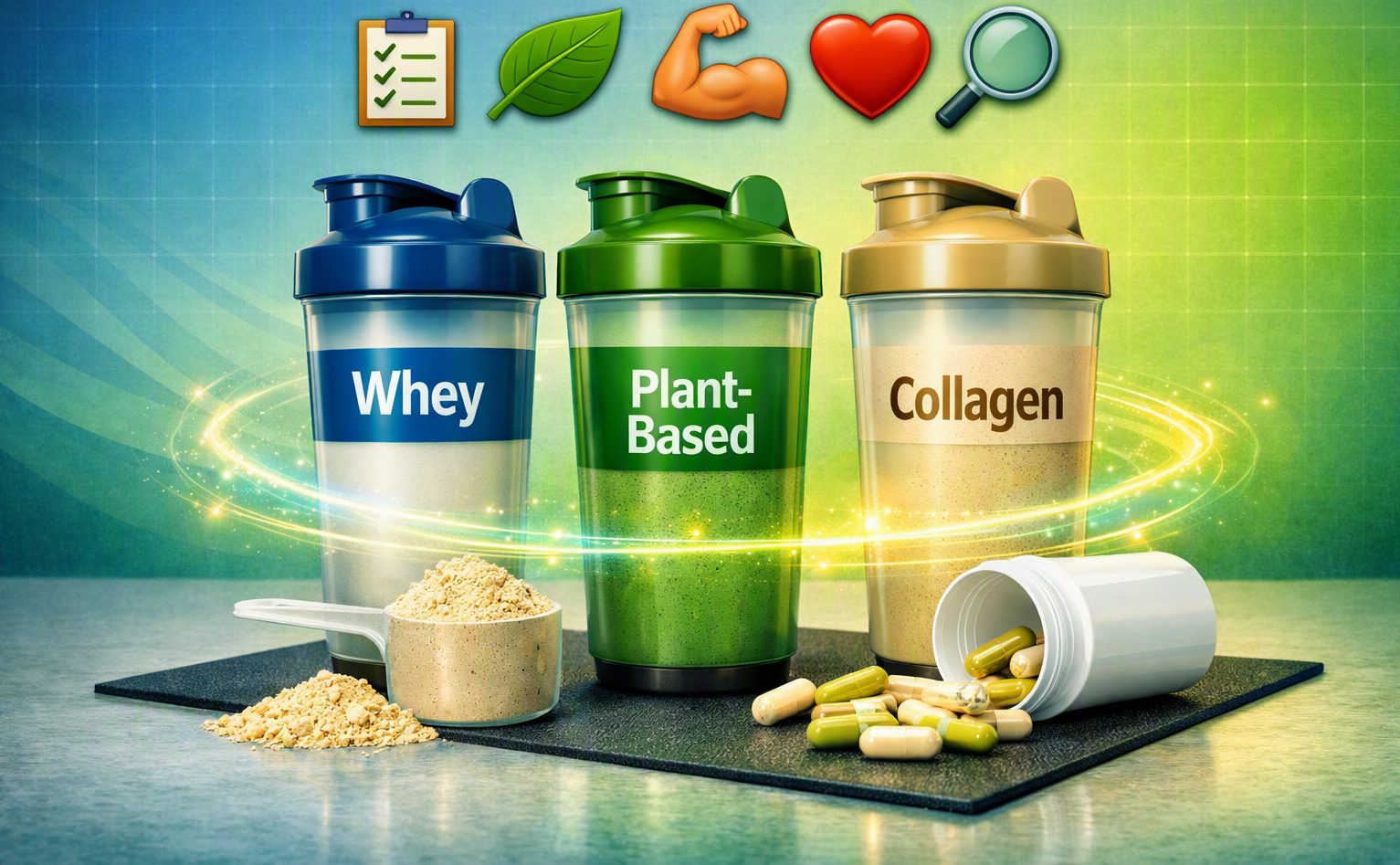
Whey Protein (The Gold Standard for Most People)
Whey is a milk protein that digests quickly and has a high leucine content — that’s the amino acid that triggers muscle protein synthesis. It’s ideal for post-workout shakes. If you tolerate dairy, whey concentrate (cheaper, contains some lactose and fat) or whey isolate (more processed, nearly zero lactose, higher protein percentage per scoop) are both solid options.
Real product example: Optimum Nutrition Gold Standard 100% Whey is the most studied and reliable whey concentrate blend on the market. It mixes easily and tastes great. If you’re lactose-sensitive, try Dymatize ISO100 — a hydrolyzed whey isolate that is practically lactose-free.
Casein Protein (For Slow Digestion)
Casein comes from milk too, but it digests over several hours. It’s best taken before bed or on long stretches without food. Most people don’t need casein unless they struggle with nighttime hunger or want extra “time-release” protein.
Real product example: Optimum Nutrition Gold Standard 100% Casein is a reliable option, though it’s thicker and can feel heavy if you shake it with too little water.
Plant-Based Protein (For Vegans or Sensitive Stomachs)
Pea, rice, hemp, and soy are common sources. Many blends combine pea and rice protein to create a complete amino acid profile. Plant proteins can be grittier, but modern processing has come a long way.
Real product example: Orgain Organic Plant Based Protein Powder is a great entry-level option — affordable, tastes decent, and uses a pea-rice-chia blend. For a higher-quality option (fewer fillers), look at Transparent Labs Plant Protein — it’s a bit pricier but has only four ingredients and no artificial sweeteners.
Egg White Protein (A Middle Ground)
Egg white protein is dairy-free but still animal-based, making it a nice option for people who can’t do whey but still want a quick-digesting animal protein. It can be a little frothy and has an eggy taste, but it’s very clean.
Real product example: Jay Robb Egg White Protein is a classic — sweetened with stevia and low in carbs.
Step 2: Check the Ingredient List (Don’t Just Look at the Front Label)
The front of the tub will scream things like “25g protein,” “grass-fed,” or “no artificial flavors.” But flip it over. The full ingredients list tells you the real story.
What to Look For
- Protein by weight: A scoop should deliver at least 20g of protein per serving. Anything under 18g is usually filler-heavy.
- Short ingredient list: Fewer than 10 ingredients is a good sign. More than 20 often means added fillers, gums, and artificial flavors.
- Third-party testing seals: Look for Informed Choice, NSF Certified for Sport, or USP verification. These mean the product has been tested for banned substances and accurate labeling.
What to Avoid
- Artificial sweeteners in excess: Sucralose and aspartame are fine in moderation, but if a tub uses three different sweeteners, it’s usually to mask cheap ingredients.
- Added sugars: Some “mass gainers” and flavored shakes pack 5-10g of sugar per serving. Unless you’re a hardgainer trying to bulk, skip these.
- Propylene glycol and carrageenan: These are thickeners and stabilizers that can cause bloating in sensitive people.
Quick tip: If you see “proprietary blend” on the label and it doesn’t list individual ingredient weights, you can’t verify how much protein you’re actually getting. Avoid that brand.
Step 3: Align Your Protein Intake With Your Daily Goals
A protein shake isn’t magic — it’s a tool. Using the right one for your goal makes all the difference.
Goal: Muscle Building (Hypertrophy)
You want a fast-digesting protein (whey isolate or a high-quality whey concentrate) with at least 2.5g of leucine per serving. Take it within 30-60 minutes after training. Aim for a shake that provides about 0.4-0.5g of protein per kilogram of body weight post-workout.
Recommendation: Klean Athlete Klean Isolate (whey isolate, NSF certified, minimal ingredients) is a top choice for serious lifters who want clean labeling.
Goal: Weight Loss or Fat Loss
You need a shake that keeps you full but doesn’t blow your calorie budget. Look for around 100-150 calories per serving, minimal carbs, and at least 20g protein. Avoid “meal replacement” shakes that are loaded with carbs and added fats — those are designed for underweight people.
Recommendation: Isopure Zero Carb is exactly what it sounds like: 25g of whey isolate with zero carbs and only 100 calories per scoop. Mix with water to keep it lean.
Goal: General Health or Convenience
If you simply don’t eat enough protein during the day (common in busy professional or older adults), a balanced blend with some fiber and digestive enzymes works well. You don’t need the fastest absorption — consistency matters more.
Recommendation: Garden of Life Raw Organic Fit is a plant-based option with greens, probiotics, and 20g protein per scoop. It’s a full food-based formula, so it’s more filling than a basic whey isolate.
Step 4: Taste and Mixability Are Non-Negotiable
You can buy the most scientifically perfect protein on paper, but if it tastes like chalk and clumps into mud balls, you won’t drink it. And a protein shake you don’t drink is a waste of money.
Here’s how to evaluate before buying:
- Look for sample packs: Many brands sell single-serving sachets. Spend $5-10 sampling before committing to a tub.
- Check online reviews for “mixability”: If multiple reviews say “clumpy even in a blender,” skip that batch.
- Flavor neutrality: Vanilla and chocolate are safe bets. Fruit flavors (strawberry, peach) tend to be hit-or-miss. Steer clear of “birthday cake” or “cinnamon toast” unless you’re sure you’ll drink it long-term.
Personal note from experience: A high-quality whey isolate like Legion Athletics Whey+ (naturally sweetened, no artificial dyes) tastes excellent in water and dissolves instantly with a shaker. It costs a bit more, but you’ll actually use every scoop.
Step 5: Compare Cost Per Serving, Not Just Price Per Tub
A huge 10lb bag that costs $60 might look like a steal — until you realize the serving size is two scoops and you need 50g of protein per shake. The math flips quickly.
To calculate true value:
- Divide the total container price by the number of servings listed on the label.
- Multiply that by how many scoops you actually plan to use per day.
- Aim for roughly $1.00 – $1.80 per serving for a solid, clean protein. Anything under $0.70 per serving often means lower-quality protein sources or fillers.
For example: Optimum Nutrition Gold Standard typically runs about $0.90–$1.10 per serving when bought in bulk on Amazon. That’s excellent value for a reliably sourced product.
Common Mistakes People Make When Choosing a Protein Shake
Mistake 1: Buying a “Mass Gainer” When You Just Want More Protein
Mass gainers often contain 600+ calories per serving, mostly from maltodextrin (a cheap carb powder). Unless you’re a 6’5” athlete trying to add 20 pounds, these will leave you bloated and storing fat. Stick to standard protein powders and add your own carbs (oatmeal, fruit, milk) if you need extra calories.
Mistake 2: Ignoring Artificial Sweetener Tolerance
Some people get stomach cramps from sucralose or stevia after-taste. Don’t assume “natural” sweeteners are automatically better. Erythritol and monk fruit tend to be the gentlest on digestion. If you’re prone to gas or diarrhea, try an unsweetened/unflavored protein and mix it with a strong flavor like chocolate milk or a banana.
Mistake 3: Overlooking the Protein-to-Calorie Ratio
A shake that says “30g protein” but also packs 300 calories is not a protein shake — it’s a meal. For a standard post-workout or snack shake, you want a ratio of at least 1g of protein per 10 calories. A 25g protein shake should be around 200-250 calories max.
Mistake 4: Buying Only on Price
It’s tempting to grab the cheapest tub on the shelf, but low-cost proteins often use “protein spiking” — adding cheaper amino acids like glycine or taurine to inflate the total protein number without actual muscle-building benefit. Stick with brands that disclose their amino acid profile or have third-party testing.
Frequently Asked Questions
Do I need a protein shake if I eat a high-protein diet?
No, not strictly. But shakes offer convenience. If you skip breakfast or train early in the morning, a shake is faster than cooking chicken. Many people find it easier to hit their daily protein target (0.7-1.0g per pound of body weight) with one or two shakes.
Can I use protein shakes for meal replacement?
Only in a pinch. Real food provides fiber, micronutrients, and chewing satisfaction. A shake should supplement meals, not replace them — unless you’re under medical supervision or doing a specific protocol.
Is plant-based protein worse for building muscle than whey?
Not if you choose a complete blend. Pea and rice protein combined are comparable to whey for muscle growth, though they may digest slightly slower. The main difference is taste and texture. If you’re not vegan, whey is typically more bioavailable per gram.
How much protein powder should I use per day?
Start with one scoop (about 20-25g protein) after your workout or as a snack. If you’re active, two scoops spread across the day is common. Going above 1.5g per pound of bodyweight rarely adds benefit and may stress digestion.
Should I take protein before or after a workout?
The most important thing is getting enough protein over the whole day, not just the window around training. That said, having 20-30g of protein within 2 hours after tough training supports repair. If you work out fasted, a pre-workout shake can help prevent muscle breakdown.
Putting It All Together: Your 3-Minute Decision Flow
Here’s a cheat sheet you can save or screenshot:
- Do you tolerate dairy? Yes → get a whey isolate or concentrate. No → go with pea/rice blend or egg white.
- What’s your goal? Muscle → fast-digesting, 2.5g+ leucine. Weight loss → under 150 calories, 20-25g protein, minimal carbs. General health → balanced with fiber or greens.
- Can you check the label? Yes → look for third-party seal, short ingredient list, no sugar spikes. No → buy from a well-known brand with transparent sourcing.
- How does it taste? Buy samples first. Don’t gamble on a huge tub.
Final Thoughts
Choosing the right protein shake doesn’t have to be confusing. Match the protein source to your body, check the ingredient honesty, and stick to a serving size that fits your daily needs. The best shake is the one you will consistently drink — not the one with the flashiest marketing or the highest numbers on the label.
Once you find a brand that works clean, tastes good, and fits your budget, stick with it. Protein powders are a commodity, not a relationship. When you know what to look for, you’ll never waste money on a bad tub again.
This page may contain affiliate links. We may earn a commission on qualifying purchases at no extra cost to you.